Description
Inside the Masterclass
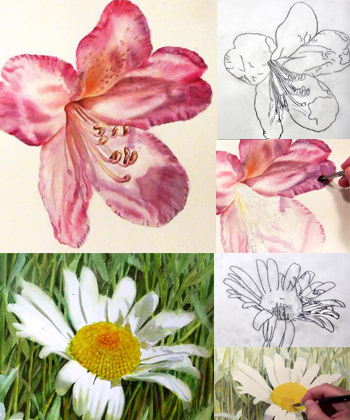
Small details can make an enormous difference in a floral painting. In this focused watercolor lesson, we explore two beautiful flower studies: the softly undulating petals of a pink rhododendron and the richly detailed centre of a white daisy.
While the two flowers are very different, both studies demonstrate how colour, value, texture and carefully placed shadows can create convincing form. You will see how subtle changes can transform a flat shape into a flower that feels delicate, dimensional and full of life.
Painting Pink Rhododendron Petals
Rhododendron petals have beautiful waves, folds and changes of direction. I demonstrate how to create these gentle undulations with transparent watercolor while keeping the petals soft and natural.
You will learn how warm and cool colours work together within the flower, how shadows describe the folds of the petals and how darker values create depth around the centre. We will also look at the delicate stamens and anthers, as well as the use of dry-brush texture to add selected details without making the painting appear overworked.
Creating the Centre of a White Daisy
The glowing centre is the heart of a white daisy and gives the entire flower its character. In this study, I show you how to build the centre gradually with colour, small shapes, light and shadow so that it appears rounded and three-dimensional.
You will also discover how carefully placed shadows help define the surrounding white petals. Instead of filling every petal with colour, subtle variations and selected edges allow the white flower to emerge naturally from the paper.
This lesson is ideal if you would like to strengthen your observation skills, become more confident with floral details and learn how to create depth without losing the transparent beauty of watercolor.
Approximately 1 hour and 15 minutes of guided video instruction.
During these two flower studies, you will learn how to:
- Create softly undulating and folded rhododendron petals
- Combine warm and cool colours within a flower
- Use shadows to describe form, movement and depth
- Paint delicate stamens and anthers
- Add natural texture with wet-on-wet, wet-on-dry and dry-brush techniques
- Build a detailed, three-dimensional daisy centre
- Use small changes in colour and value to suggest many tiny details
- Create beautiful shadows on white petals without overpainting them
- Balance soft transitions with carefully chosen defined edges
Watch a Preview
Enjoy a glimpse inside the lesson and watch Doris demonstrate her watercolor painting process.
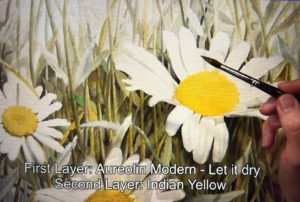
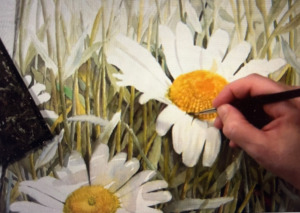
Step-by-Step Photos
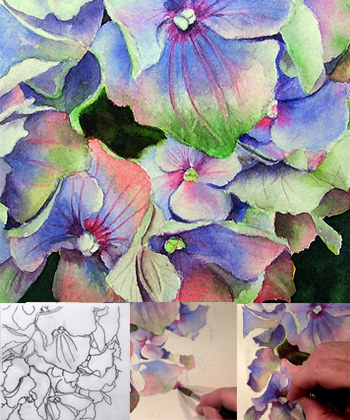
Follow the development of the hydrangea and discover how the transparent layers, colour transitions, shadows and delicate details gradually bring the petals to life.
Reference Material
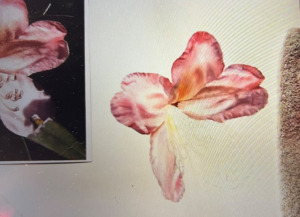
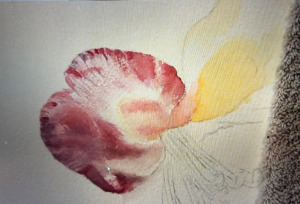
Carefully prepared reference material is included for both flower studies, allowing you to concentrate on the painting techniques and follow the demonstrations at your own pace.
Your reference material includes:
- Reference photograph of the white daisy
- Reference photograph of the pink rhododendron
- Drawings of both flowers
- Images of the finished watercolor studies
Two Flowers – Two Essential Skills
Use these studies individually or return to them whenever you would like to practise a particular skill. The rhododendron will help you understand movement, folds and delicate petal texture, while the daisy demonstrates how small shapes, colour changes and shadows can create a beautifully detailed flower centre.