
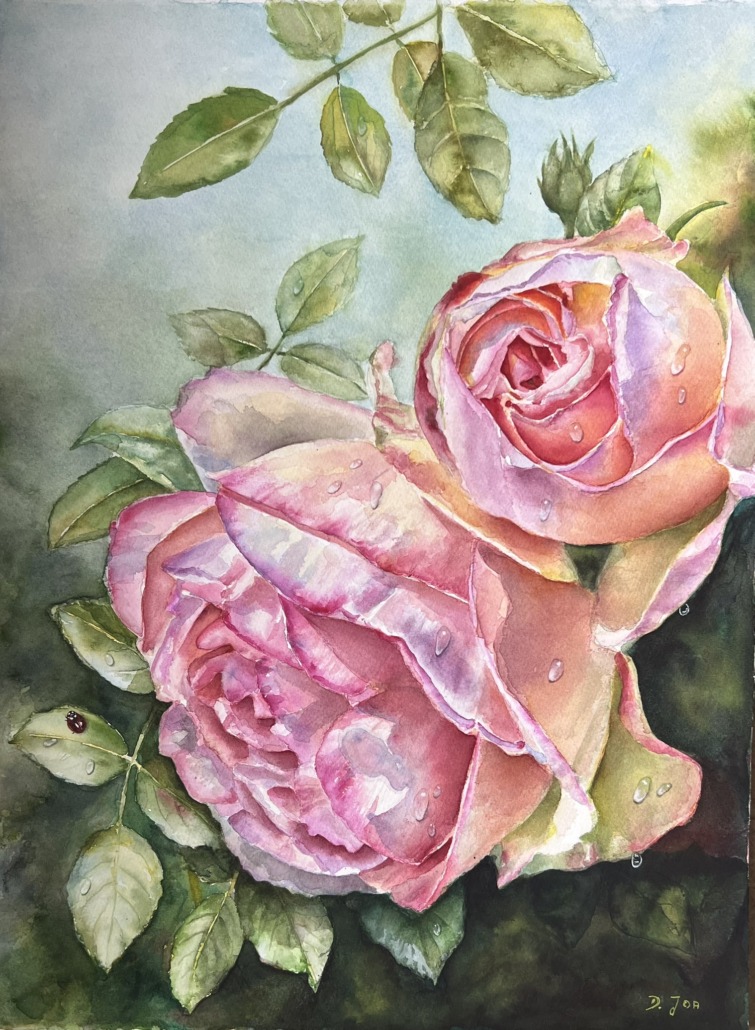
How to Change the Mood of a Watercolor Painting: Eden Rose
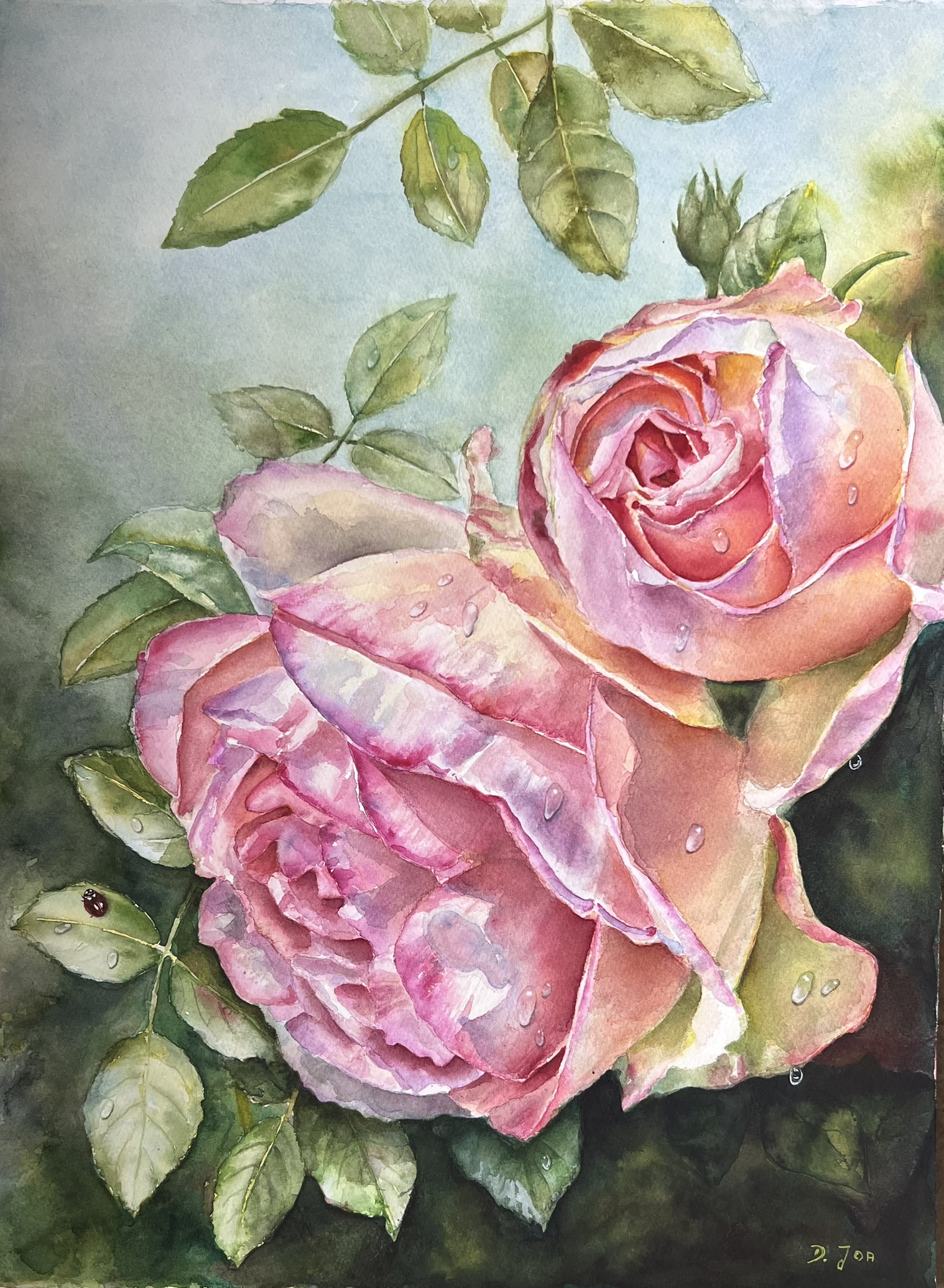
How to Change the Mood of a Watercolor Painting: Eden Rose
How a watercolor rose found its atmosphere
Sometimes a painting is nearly finished, yet it still does not feel quite like the place you remember. My Eden Rose changed when I followed that feeling and let the shadows grow deeper.
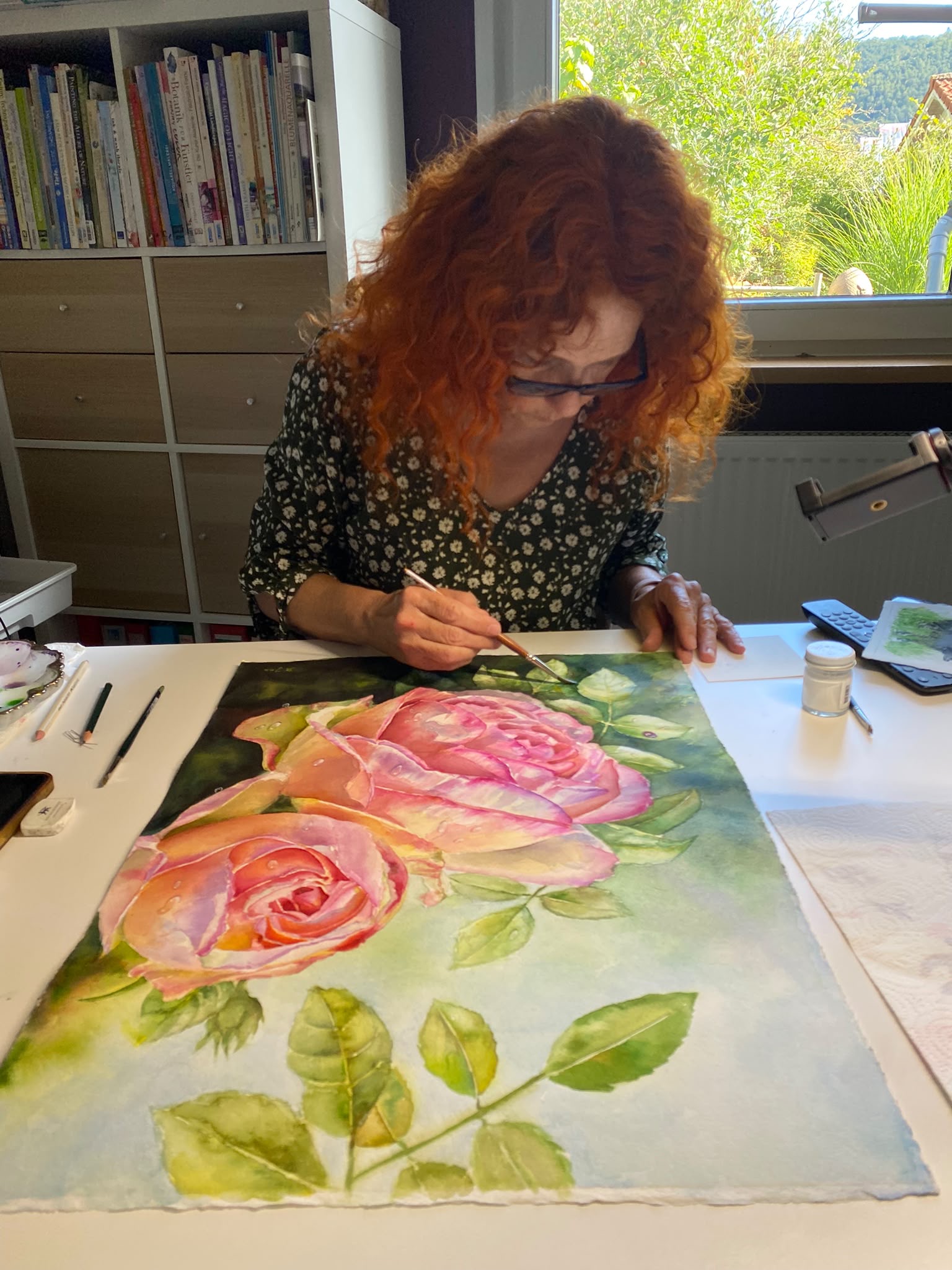
At first, I was looking closely at the roses themselves: the folds of the petals, their warm blush and cooler violet notes, and the play of light across two generous blooms. But I wanted the air around them to belong to the painting as well.

Letting the darks do their work
I returned to the foliage and the darker areas around the flowers. As I built up those passages, the pale shapes of the roses began to glow more strongly. Their edges no longer floated in an even background; they had depth and a place to emerge from.
In the cooler colour and the softened transitions, I began to see something like mist rising from the garden. I did not set out with a recipe for fog. It was a sensation that appeared as the painting changed, and I wanted to follow it.
Suddenly the painting felt damp to me — as though the morning air had settled on the petals.
When the dewdrops made sense
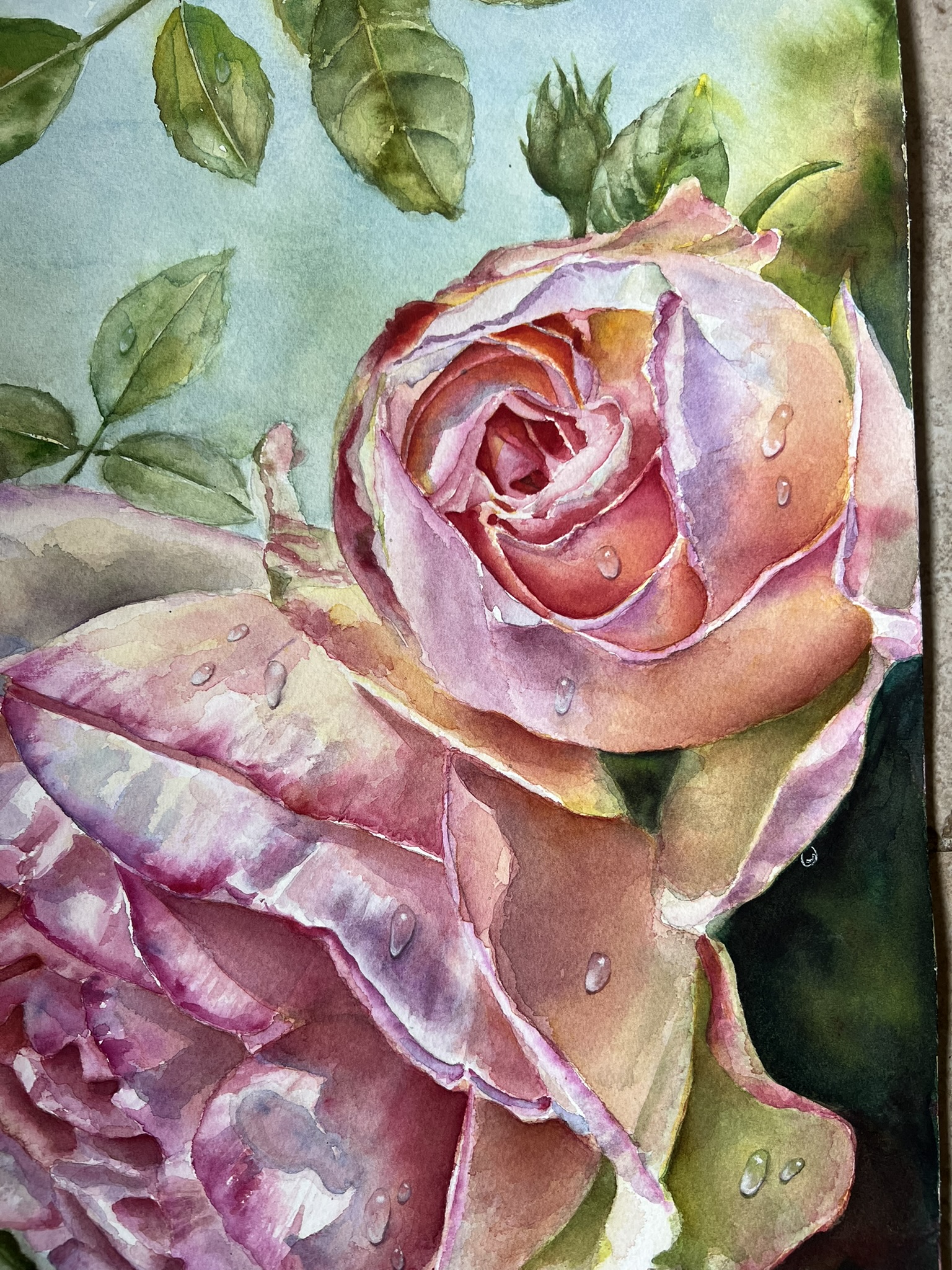
Once that atmosphere was there, the water droplets felt completely natural. A few glints on the petals and leaves brought the cool morning air into focus. I kept the lightest marks small so they would feel like moisture catching the light, not decoration placed over the roses.
That is what fascinates me about painting. A deeper shadow can make a flower luminous; a tiny drop of water can make the whole scene feel freshly alive.
A visitor among the leaves
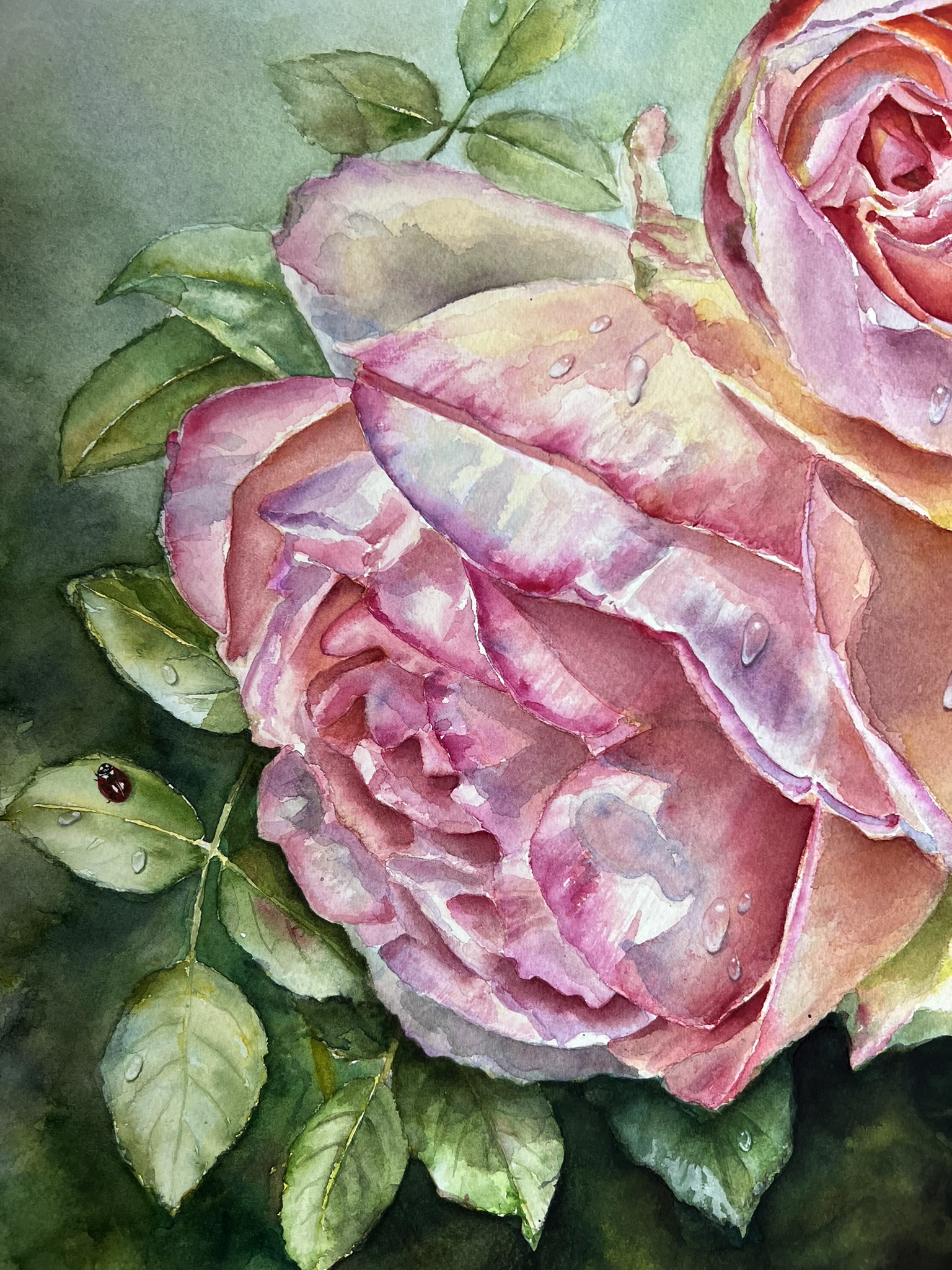
There is also a little ladybird tucked into the leaves. It is easy to miss at first glance, and that is exactly why I enjoy it: a quiet discovery for someone who comes closer to the original. Along with the dewdrops, it gives this painted garden a little life of its own.
Following what the painting needs
For me, this was not a matter of adding more detail everywhere. It was about noticing what was missing and changing the relationship between light, shadow and colour. The roses remained the heart of the painting, but the atmosphere gave them a story.
I am glad I went back into those darks. The finished Eden Rose now has the feeling of a quiet morning after rain — and the little ladybird is still there if you look for it.