
How to Paint White in Watercolor | Warm and Cool Shadows
White Is Never Just White
In watercolor, the lightest white is already waiting for you: it is the untouched paper. The painting begins when warm, cool and reflected colors enter the shadows.
This lesson shows how the same idea works across very different subjects—from daisies and white roses to the folds of a white dress.
How to Paint White in Watercolor
A white subject is shaped by everything around it. A shadow may lean toward blue or violet, but it can also carry yellow, orange, green or red reflected from its surroundings. Those choices decide whether the painting feels cool and quiet or warm and sunlit.

White Daisies
Much of the paper remains untouched. Color appears where petals turn from the light or receive a cast shadow. I used green, blue, yellow and a small touch of red.

A Cool White Rose
Blue and blue-violet give this rose a cooler character. Small touches of yellow keep the petals alive and prevent the shadows from becoming dull gray.

A Warm White Rose
Here the shadows sing the song of sunlight. Warm yellow, orange, red-violet and reflected green make the petals feel luminous and full of movement.
Mixing Shadow Colors for White Subjects
A violet mixed from blue and red is a dependable beginning. More blue creates a cooler shadow; more red creates a warmer one. But the most convincing shadows are rarely made from only two colors.
- Observe the light: cool daylight and warm sunlight suggest different palettes.
- Look for reflected color: leaves, skin, fabric and backgrounds all influence nearby whites.
- Avoid automatic gray: a lifeless neutral can flatten the subject.
- Vary every passage: let one shadow move gently from warm to cool instead of using one mixture everywhere.
From Gray-Blue to Warm and Graceful
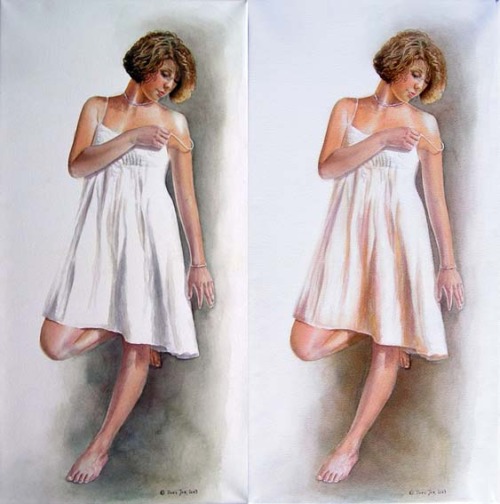
In my watercolor figure painting Ines, the first version of the white dress contained too much gray and blue. The figure was correct, but the painting did not yet express the elegance, grace and soft femininity I wanted.
I glazed yellow, orange, red and purple over the cool passages and warmed the background as well. The dress was still perceived as white, yet the entire atmosphere changed. This is the expressive power of shadow color.
Painting White Step by Step
Continue with related free lessons
How to Paint White FlowersColor TheoryPainting DarksAll Free Lessons
Paint a Complete White Rose
In the White Rose Masterclass, I show the entire painting step by step—from the first drawing and transparent washes to luminous petals, leaves, background, edges and finishing details.




Leave a Reply
Want to join the discussion?Feel free to contribute!